The Homeowner's Guide to EV Charger Installation for Blue Mountains, NSW
What Are the Different Types of Home EV Chargers?
There are three main charger levels available to Australian homeowners. Understanding each one helps you match the right option to your daily driving needs.
Level 1 (Mode 2) Charging
This uses a standard 10-amp power point with a portable cable. It delivers roughly 10 to 15 km of range per hour, making it the slowest option. It requires no dedicated installation, but for most EV owners who drive regularly, it simply will not keep up with daily use.
Level 2 (Mode 3) AC Charging
This is the most popular choice for home EV charger installation . It uses a dedicated 240V circuit and a wall-mounted unit. A standard single-phase setup delivers around 7 kW, which adds approximately 40 to 50 km of range per hour. Most EV owners find this more than enough to fully recharge overnight.
Three-Phase AC Charging
If your home has three-phase power, you can access faster 11 kW or 22 kW chargers. These suit homeowners with longer daily commutes or multiple EVs. However, it is worth noting that your EV's onboard charger sets the ceiling on charging speed, regardless of what the wall unit can supply.
How Do I Know If I Need Single or Three-Phase Power?
Most homes in Australia, and that includes most Blue Mountains, NSW, properties, run on single-phase power. A 7 kW single-phase charger is sufficient for everyday charging needs for most households. Three-phase power gives you access to faster charging, but upgrading from single-phase to three-phase is a significant electrical project.
Before making that decision, check the maximum AC charging rate your specific EV model supports. Some vehicles are capped at 7 kW regardless of the supply type. A licensed sparky can inspect your switchboard and confirm exactly what your home can support.
What Happens During a Site Assessment?
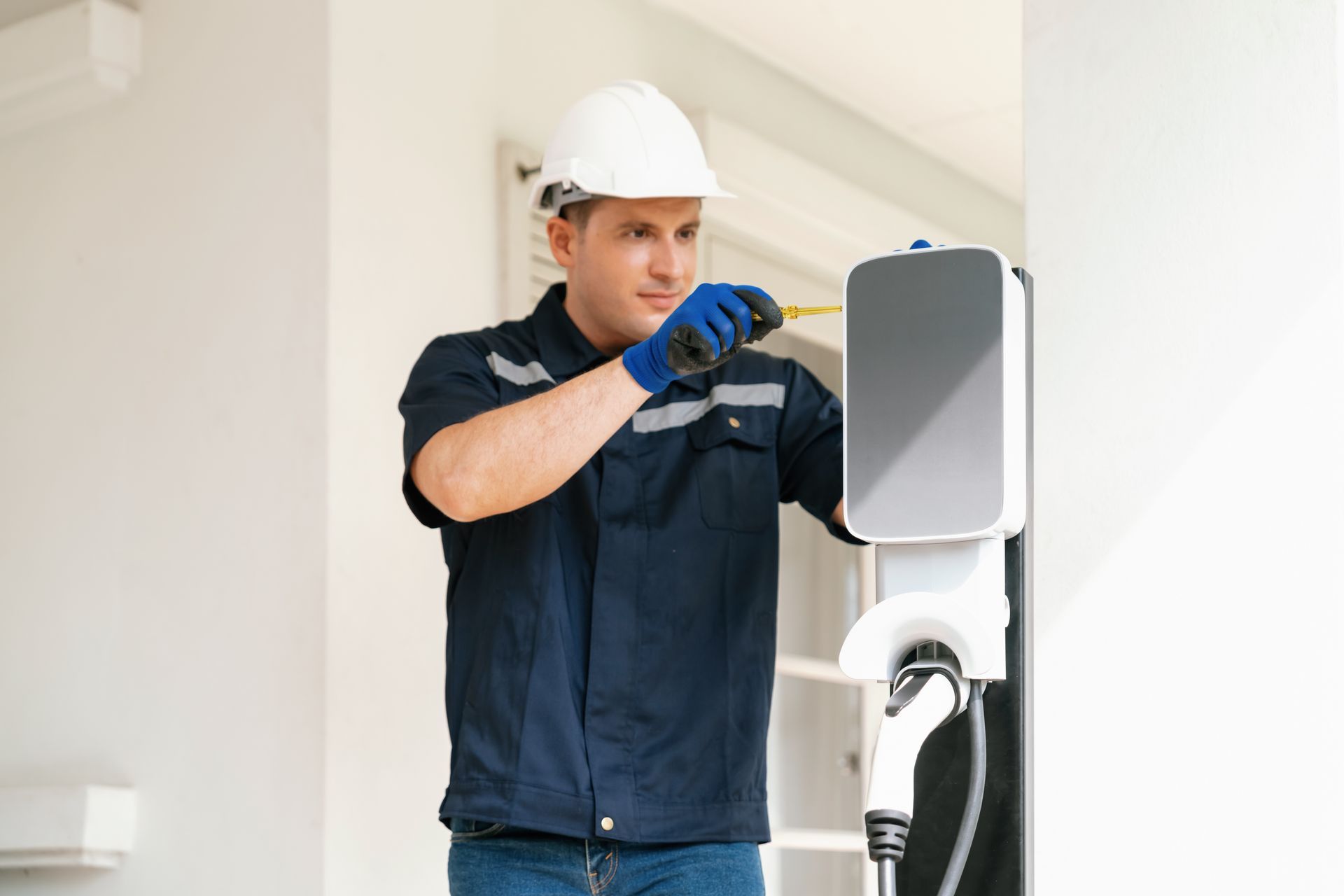
A proper site assessment is the essential first step before any EV charger installation in the Blue Mountains, NSW, or elsewhere. A qualified electrical professional will review several key factors.
They will inspect your switchboard to confirm it has sufficient capacity and compliant safety switches for a dedicated EV circuit. Older switchboards that still use ceramic fuses or lack modern safety devices may need upgrading before installation can proceed. This is a safety requirement, not an optional extra.
The sparky will also measure the cable run distance between your switchboard and the intended charger location. Shorter cable runs reduce labour and materials costs. If your garage or carport is on the opposite side of the house from your switchboard, a longer conduit run will be needed, and this affects the total cost.
Does My Switchboard Need to Be Upgraded?
Many Blue Mountains, NSW, homes are older properties, and their switchboards may not be equipped for the additional load of a dedicated EV circuit. If your board is full, outdated, or missing required safety switches, an upgrade will be necessary. A switchboard upgrade typically costs between $1,500 and $2,500, but it improves overall electrical safety across your entire home, not just for EV charging.
What Compliance Rules Apply in NSW?
EV charger installation is classified as electrical installation work under NSW electrical safety legislation. This means the work must be carried out by a licensed electrical contractor. There is no special additional accreditation required beyond a standard electrical licence, but experience with EV-specific systems matters when it comes to switchboard assessment and network notification requirements.
In NSW, the relevant Distribution Network Service Provider (DNSP) for the Blue Mountains, NSW, is Endeavour Energy. For chargers above 20 amps single-phase, there are requirements around demand-response capability and DNSP notification. In practical terms, this means most standard 7 kW home charger installations now need to use an OCPP-capable charger to satisfy these requirements.
All work must also comply with the AS/NZS 3000 Wiring Rules, which covers circuit protection, cable sizing, RCDs, and mechanical protection. Your electrical expert should provide a Certificate of Compliance upon completion.
What Is an OCPP-Capable Charger?
OCPP stands for Open Charge Point Protocol. It is a communication standard that allows chargers to receive signals from the network operator to briefly reduce or pause charging during periods of high demand. From 2025 onward, most standard homes will require this. An EV charger installation in NSW requires this capability. Popular brands including Wallbox, Zappi, and Fronius support OCPP. Your licensed sparky can confirm which models meet current requirements before you purchase hardware.
What Smart Features Should Blue Mountains, NSW, Homeowners Consider?
Modern EV chargers come with a range of smart features that can reduce your running costs and make charging more convenient.
- Scheduled charging lets you programme the charger to run during off-peak electricity tariff periods, typically overnight. This can meaningfully reduce the cost of each charge cycle over time.
- Solar integration is a popular option for Blue Mountains, NSW, homeowners who already have rooftop solar. A solar-compatible charger, such as the myenergi Zappi or similar models, can prioritise surplus solar energy to charge your vehicle before drawing from the grid. Given that Katoomba receives an average of six to nine sunshine hours per day, pairing solar with a smart charger can offer genuine long-term savings .
- Dynamic load management monitors the total electrical load on your home and adjusts the charge rate to prevent your switchboard from being overloaded. This is especially useful in older homes where the existing electrical capacity is shared across heating systems and other high-draw appliances.
- Wi-Fi and app connectivity allows you to monitor usage, track charging history, and adjust settings remotely from your smartphone.
Where Should You Place Your EV Charger Installation in the Blue Mountains, NSW?
Location matters, particularly given the local climate. The Blue Mountains, NSW, experiences a temperate climate with cool to cold winters, significant annual rainfall, and higher humidity compared to coastal Sydney. Weather conditions are generally more variable than in the Sydney basin, with occasional storms and fog forming in the valleys.
For these reasons, the placement of your charger deserves careful thought.
Key considerations include the following:
- Selecting a charger with a weatherproof IP rating suitable for outdoor or semi-exposed installation.
- Mounting the unit in a sheltered position, such as inside a garage or under a carport, to reduce direct exposure to rain and temperature swings.
- Ensuring the charger is positioned to minimise the cable run from your switchboard while keeping the unit accessible from where you park.
- Avoiding installation in areas prone to pooling water or moisture ingress, which are more common on elevated mountain properties with heavy rainfall.
- Confirming the chosen charger is rated for the temperature range the Blue Mountains, NSW, experiences, which can drop to around 5 to 6°C in winter in upper mountain areas such as Katoomba.
A licensed electrical specialist familiar with the region will factor these conditions into the placement recommendation.
How Long Does EV Charger Installation Take?
For a standard Level 2 charger with a straightforward cable run and a compliant switchboard, the installation typically takes between two and four hours. More complex jobs, such as those requiring a switchboard upgrade, extended cable runs, or conduit through walls, can take longer or may require a follow-up visit.
The process generally follows these steps:
- Site inspection and electrical assessment, including switchboard review and cable run planning.
- Charger selection and hardware confirmation, ensuring the unit is approved for Australian use and meets IP rating requirements.
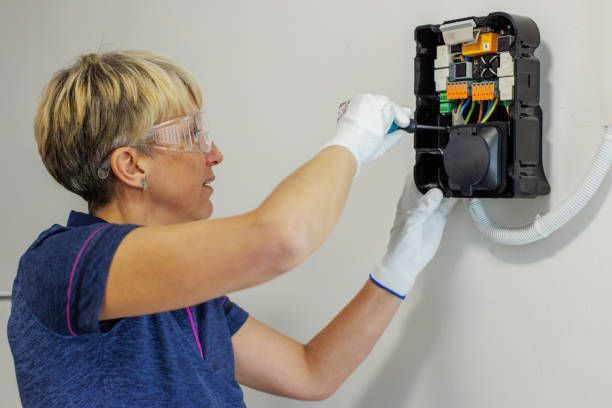
- Installation of the dedicated circuit, safety switches, and conduit where needed.
- Mounting and wiring of the charger unit.
- Testing and commissioning, including confirmation of OCPP setup where required.
- Issue of the Certificate of Compliance for Electrical Work.
What Does an EV Charger Set-Up Cost in Australia?
Cost varies depending on several factors, and the Blue Mountains, NSW, is no different from other regional areas in that site complexity can influence the final figure.
General cost ranges include:
- Basic single-phase installation (short cable run, compliant switchboard): approximately $850 to $1,200 for installation labour alone.
- Mid-range installation with longer cable run: approximately $1,200 to $1,800.
- Three-phase EV charger installation where three-phase supply already exists: approximately $1,800 to $2,600.
- Switchboard upgrade if required: approximately $1,500 to $2,500.
- Hardware costs for the charger unit: approximately $750 to $2,000 depending on brand and features.
Older Blue Mountains, NSW, homes that may have dated switchboards or long cable runs between the board and the parking area should factor in the possibility of additional work. Getting a detailed, itemised quote that separates hardware, labour, and any switchboard work gives you a clear picture before committing.
Why Does Using a Local Licensed Sparky Matter?
Choosing a licensed electrical expert in EV charger set-up means the job will be done to the correct Australian standards, with the appropriate compliance documentation. It also means someone who understands local conditions, including Endeavour Energy's requirements for the Blue Mountains, NSW, service area, can manage the DNSP notification process on your behalf. This avoids potential delays or compliance issues down the track.
Attempting to shortcut the process with non-compliant installation can void your charger guarantee, create issues when selling your property, and, most importantly, create serious safety risks.
Ready to Install Your EV Charger? Talk to the Experts Today!
When you are ready to move forward with EV charger installation, working with a local, licensed team makes the process straightforward from the site assessment through to commissioning. MKD Electrical is a licensed local installer with decades of experience across residential and commercial electrical work. You can get in touch via the contact page to arrange a site assessment.